AI STRATEGY · PARTNERSHIPS · EXECUTION

Turn complex transformation into measurable growth.

Damon Willis helps executives and institutions use AI, strategic partnerships, and better operating systems to move from ambitious ideas to practical results.

Executive leader AI product builder Partnership strategist Applied researcher

01

EXECUTIVE STRATEGIST
AI PRODUCT BUILDER
APPLIED RESEARCHER

EXECUTIVE STRATEGYEDUCATION & IMPACTAI PRODUCT BUILDINGAPPLIED RESEARCH

THREE WAYS TO WORK TOGETHER

Start with the outcome.
Then build the system.

Important problems rarely fail because leaders lack ideas. They fail because strategy, people, technology, and execution never become one system.

01AI STRATEGY

Transform with AI

Move from scattered experiments to responsible adoption, a prioritized use-case portfolio, and pilots your team can measure.

Assess your AI opportunity
02PARTNERSHIP GROWTH

Build partnerships

Create durable ecosystems where the value proposition is clear, stakeholders stay aligned, and outcomes earn renewal.

Build the partnership roadmap
03OPERATING SYSTEMS

Design the system

Connect priorities, decisions, dashboards, accountability, and automation so strong strategies become everyday execution.

Design your operating system

A REPEATABLE METHOD

The Willis
Growth System

Six moves that turn an ambitious idea into a measurable, repeatable, and compounding advantage.

Explore the framework
01

Signal

See what is changing—and what matters.

02

Focus

Choose the highest-leverage opportunity.

03

Align

Connect people, incentives, and evidence.

04

Build

Turn strategy into a working system.

05

Measure

Make progress visible and trustworthy.

06

Compound

Convert learning into reusable advantage.

IDEAS → SYSTEMS → ACTION

DW

SPEAKING & WORKSHOPS

Ideas that move leaders—and give them a system to act.

Damon brings together executive leadership, AI strategy, partnership growth, and applied research to give audiences practical frameworks they can use the next day.

  • The Intelligent Organization
  • Partnerships That Perform
  • From Strategy to System
Explore Speaking Topics

AI & PRODUCT LAB

Build what the
future requires.

Practical AI tools, executive playbooks, dashboards, and workflow experiments—built to make better decisions and useful work easier.

Explore the Product Lab
WILLIS / PRODUCT LAB03 ACTIVE BUILDS
01
ASSESSMENT

AI Opportunity Score

Find the right first pilot in five minutes.

IN DESIGN
02
OPERATING TOOL

Executive Command Center

Turn priorities, risks, and decisions into one view.

PROTOTYPE
03
PLAYBOOK

Partnership Health Score

Measure value, alignment, and renewal readiness.

RESEARCH

IDEAS FOR LEADERS WHO BUILD

Field notes for the
work ahead.

Get every field note
01
FIELD NOTE · ATTENDANCE

A toolkit is not an attendance strategy.

A five-part operating rhythm that turns useful resources into coordinated support for students and families.

Read the article
02
EXECUTIVE BRIEF · PARTNERSHIPS

The partnership dashboard I want to see.

Measure a partnership by the barriers it removes and the outcomes it improves—not the logos it collects.

Read the article
03
EVIDENCE BRIEF · ATTENDANCE

A school transfer should trigger more than paperwork.

Student mobility is an early attendance-risk signal—and a prompt for a faster, more human response.

Read the article
ORIGINAL THINKING · PRACTICAL EVIDENCE

Ideas built to be
used.

These articles translate Damon's current field notes and research into practical decisions for education, partnership, and impact leaders.

A toolkit is not an attendance strategy.

It becomes a strategy when somebody owns the next move.

Schools are not short on attendance resources. The implementation gap appears when a signal is visible, but the next conversation, support, handoff, or follow-up is not clearly owned.

The solution is an operating rhythm simple enough to remember and specific enough to run every week:

  1. SignalIdentify the attendance change early and add the context behind the number.
  2. ConversationAsk the student or family what changed before deciding what they need.
  3. SupportMatch the barrier to a practical intervention, not a generic reminder.
  4. HandoffName the person responsible for the next action and the date it should happen.
  5. Follow-upCheck whether the support reached the family and changed the pattern.
“Your system is only as strong as its weakest handoff.”

A useful toolkit can strengthen every step. But the toolkit does not create ownership, coordination, or trust by itself. Leaders do. The real test is whether a student's signal produces a timely, human response.

Source context: Communities In Schools describes the national attendance toolkit as evidence-based guidance designed for practical, localized, relationship-driven support. Read the source

The partnership dashboard I want to see.

Not a list of logos. A record of barriers removed and outcomes improved.

Partnership reports often count meetings, programs, and participating organizations. Those measures show activity. They do not yet prove that the partnership made a meaningful difference.

A stronger dashboard connects each partner contribution to the operating problem it addresses, the people reached, and the result the institution is trying to improve. Four questions sharpen that view:

01What barrier was this partnership designed to remove?

02Which students, families, or teams experienced the support?

03What changed after the support—and compared with what?

04What should we renew, redesign, scale, or stop?

There is encouraging evidence for this approach. A Learning Policy Institute study of Los Angeles Unified community schools reported that chronic absence in the study cohort fell by 33% from 2021–22 to 2023–24. After adjustment, the reduction was about 9% greater than in comparison schools.

“If a partnership dashboard cannot connect activity to a student outcome, it is not finished yet.”

Evidence note: this finding concerns a specific cohort and period; it should inform local design, not be treated as a guaranteed result. Review the study brief

A school transfer should trigger more than paperwork.

It should trigger an attendance plan.

A transfer is an administrative event, but it can also signal a major change in transportation, housing, relationships, routines, or access to support. Treating it only as enrollment paperwork can hide the exact conditions that make attendance harder.

A 2026 National Center for Homeless Education brief reported that students who changed schools one or more times were four times as likely to be chronically absent. That is not a verdict about any individual student. It is a strong reason to respond earlier.

Within the first days of a transfer, ask:

  1. 01Does the student have reliable transportation?
  2. 02Which adult will make the first durable connection?
  3. 03What support or routine was lost during the move?
  4. 04Which school or community partner can restore it?
  5. 05Who will check attendance and belonging after ten school days?
“A transfer is not only a change of school. It is a change in life that the system should notice.”

Source: National Center for Homeless Education, In School Every Day: Addressing Chronic Absenteeism Among Children and Youth Experiencing Homelessness (2026). Read the evidence brief

Who is missing from the attendance table?

The most important person in the plan may be the one who was never invited.

Attendance barriers do not respect organizational charts. A family may need transportation, health support, housing navigation, after-school coverage, or a trusted community relationship before another school-based intervention can work.

Before the next attendance meeting, look at the empty chairs. Is transportation represented? The district's homeless liaison? Mental health? An after-school provider? A community organization families already trust?

“Whose absence from this table will slow the response when a student needs help?”

The goal is not a larger meeting. It is the smallest complete team capable of understanding the barrier, acting quickly, and closing the loop with the student or family.

Source context: the U.S. Department of Education identifies chronic absenteeism as a multi-factor challenge and points districts toward family engagement, early warning systems, and community partnerships. Explore the federal resources

RESEARCH → PRACTICE

Confidence is useful.
Evidence is better.

Damon's applied research connects credible evidence to practical leadership decisions—clearly separating established findings, field learning, and emerging ideas.

DW

EXECUTIVE · BUILDER · APPLIED RESEARCHER

ABOUT DAMON

“Transformation becomes real when people, technology, evidence, and execution begin working as one.”

Damon Willis works at the intersection of growth, institutional partnerships, AI, and operating execution. His mission is simple: help leaders make ambitious change practical, measurable, and scalable.

Read Damon's story

MY STORY

You can always
rewrite your story.

My path was not linear. It was built through reinvention—each chapter teaching me something I now use to help leaders turn possibility into practical progress.

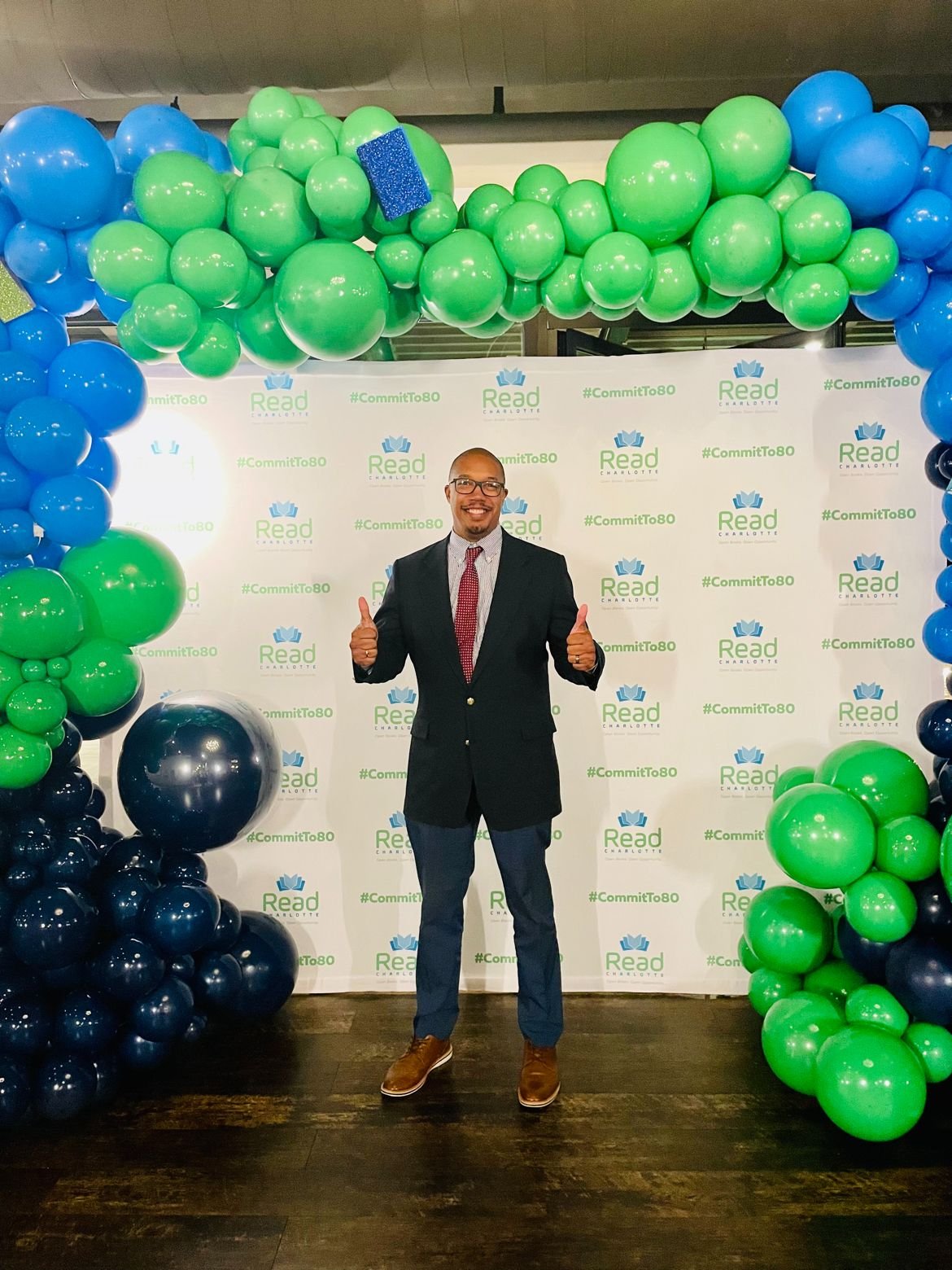
Damon Willis standing at a community education event
“It is not about where you start. It is about how many times you are willing to reinvent yourself.”
01
THE FIRST REWRITE

From dropout to possibility.

I dropped out of high school believing my options were limited. Music became my first outlet, and becoming a rapper taught me resilience, discipline, and how to create something from very little. In 2008, with only a high school diploma, I became a licensed financial advisor. Then the economic downturn forced me to rethink everything again.

02
EDUCATION CHANGES THE QUESTION

Purpose appeared in a classroom.

Working as a reading interventionist and computer instructor showed me what happens when the right support reaches a student at the right moment. I helped move third-grade reading proficiency from 18% to 58.5%. In 2013, I returned to school myself—proving that reinvention was not just something I could encourage in others. It was something I could live.

03
BUSINESS PROVES THE SYSTEM

Strategy became measurable.

After earning my undergraduate degree and MBA, I entered corporate leadership. At Union Pacific, I managed a customer portfolio exceeding $160 million and secured more than $7 million in new business. That chapter taught me how disciplined strategy, customer understanding, and strong operating systems turn ambitious targets into measurable results.

04
PURPOSE MEETS SCALE

Then I brought the systems back to education.

In 2019, I became a Broad Resident and moved fully into district strategy. I later earned my M.Ed. and began leading strategic partnerships for Charlotte-Mecklenburg Schools. Today, I lead engagement, partnership impact, CRM modernization, and measurement across an ecosystem of more than 480 partners serving 186 schools.

186SCHOOLS SERVED BY THE DISTRICT ECOSYSTEM
480+COMMUNITY AND CORPORATE PARTNERS
$160M+CUSTOMER PORTFOLIO LEADERSHIP
18 → 58.5%EARLY READING PROFICIENCY GROWTH
W

THE WILLIS BRIEF

One useful idea.
Five minutes.

A practical field note each week on AI, leadership, partnerships, and execution—built for leaders who need results, not hype.

One signal. One insight. One framework. One move.